
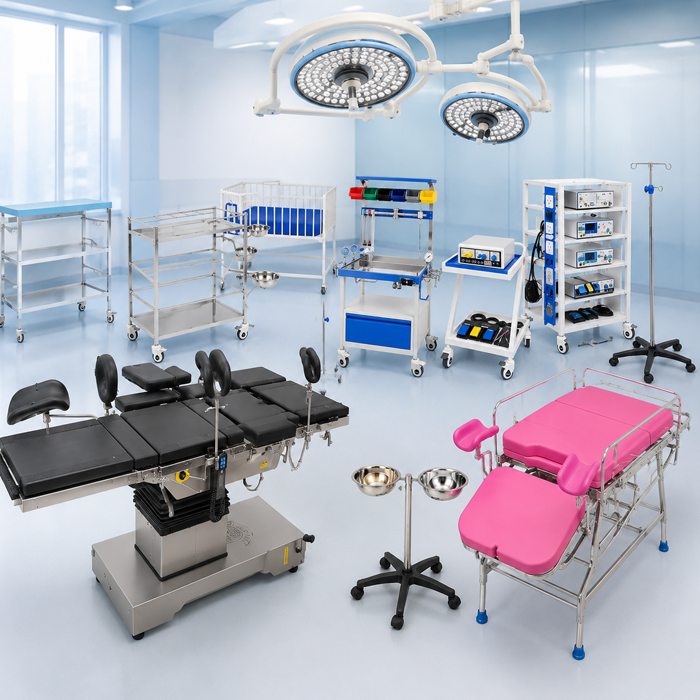
Operation Theatres (OT) require equipment that blends structural robustness with effortless clinical versatility. A surgical table is the centerpiece of any operating room, directly impacting surgical precision, surgeon ergonomics, and patient safety.
1. Surgical Specialty & Versatility
Modern surgical suites cater to diverse disciplines ranging from general laparoscopy and orthopedics to neurosurgery and cardiac procedures. When selecting an OT table, look for full articulability: Trendelenburg, reverse Trendelenburg, lateral tilt, flex-reflex, and smooth height adjustability.
2. C-Arm Imaging Compatibility
Fluoroscopy and intraoperative radiography are essential in modern surgery. Ensure your OT table features an eccentric column design and a radiolucent table top that allows uninhibited 360-degree C-Arm rotation without mechanical obstruction.
3. Drive Mechanism: Hydraulic vs. Electro-Hydraulic
While manual hydraulic tables provide reliable, power-independent operation ideal for high-volume centers, electro-hydraulic systems with corded remote handsets offer smooth micro-adjustments during delicate procedures. Having an integrated battery backup is crucial to safeguard against power interruptions.
4. Hygiene & Stainless Steel Construction
Infection control is paramount. Choose tables manufactured with medical-grade non-magnetic stainless steel (SS 304) for columns and base covers, complemented by seamless, anti-static, disinfectable mattresses.